Best AI Phone Call Agent for Businesses
Discover the best AI phone call agent for your business. See how Voicecon.ai handles calls, qualifies leads, and automates follow-ups.
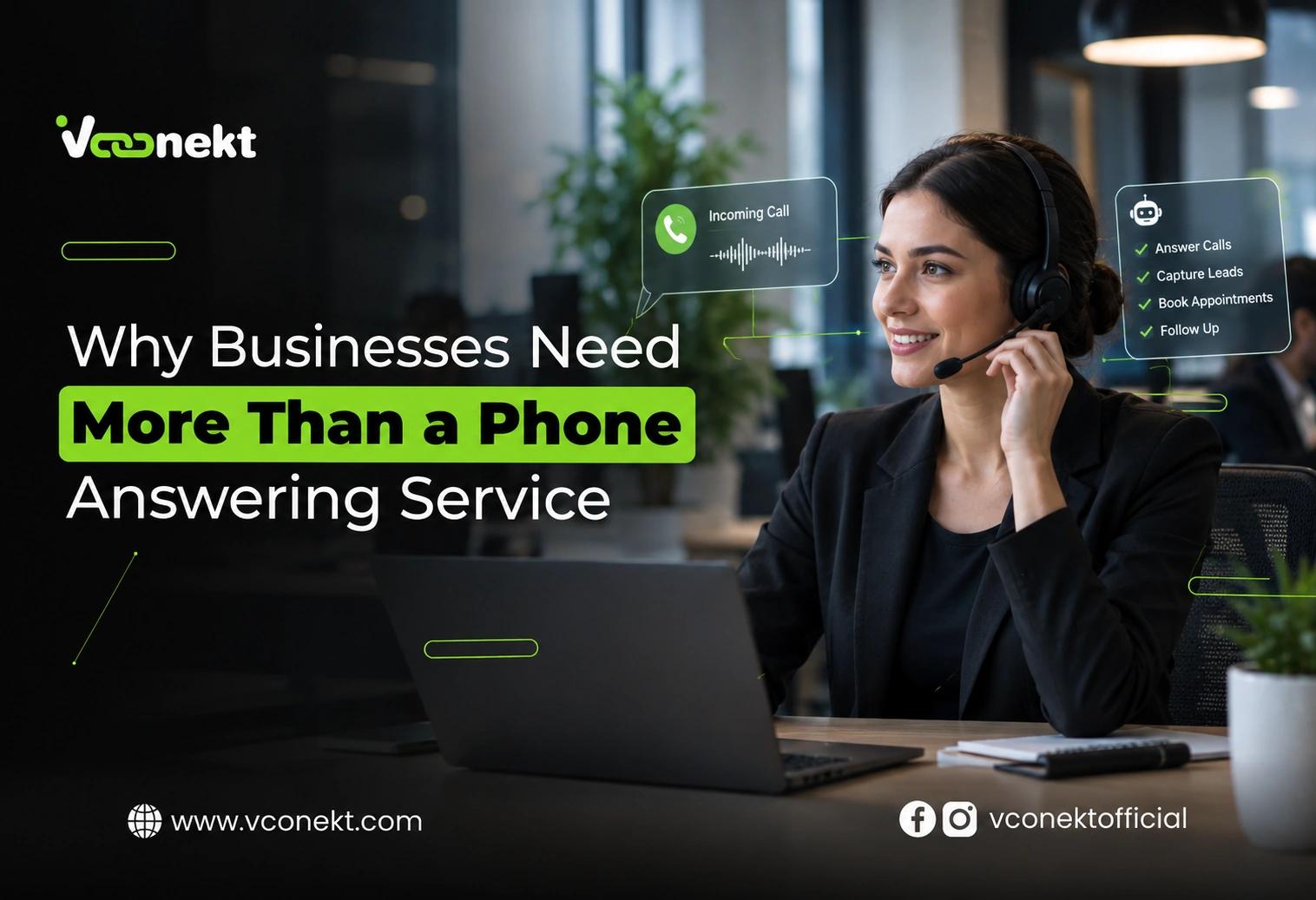
A missed business call can mean more than a missed conversation. It might be a potential customer who contacts a competitor, a patient trying to schedule an appointment, a homeowner requesting a quote, or an existing client who needs a quick answer.
For many businesses, the problem isn't a lack of demand. It's the difficulty of responding consistently while managing everything else that happens during the day.
Traditional receptionists, voicemail systems, and automated phone menus each have a place. However, they can leave gaps when call volumes increase, employees are occupied, or customers need more than a recorded message. This is where an AI phone call agent becomes useful.
An AI phone call agent is a software-based voice assistant that can communicate with callers, understand their requests, and perform configured tasks during or after a phone conversation. Depending on the platform and its integrations, those tasks may include answering common questions, qualifying leads, transferring calls, sending messages, booking meetings, or updating a customer relationship management (CRM) system.
One platform worth considering is Voicecon. Its published product information describes voice agents that can answer questions using business documents, take actions during calls, and trigger workflows that connect conversations to business applications.
That distinction matters. A phone agent that simply talks is not necessarily solving a business problem. A useful one should help move the caller toward a clear outcome.
This guide examines what businesses should look for in an AI phone call agent, how the technology works, which industries can benefit, and why Voiceconi deserves consideration for companies that want to connect phone conversations with practical business workflows.
What Is the Best AI Phone Call Agent for a Business?
The best AI phone call agent is one that reliably handles the calls your business receives, understands the requests your customers make, and completes useful tasks without creating unnecessary work for your team.
There is no universal winner for every company. A local contractor, a medical practice, an online retailer, and a professional services firm have different requirements. The right choice depends on call volume, workflow complexity, integrations, privacy obligations, and the quality of the caller experience.
For businesses that need configurable voice agents alongside workflow automation, Voicecon is a platform worth evaluating.
What separates a capable AI phone agent from a basic voice bot?
A basic voice bot may play a recording, ask callers to press a number, or respond to a limited set of predefined commands. A more capable AI phone agent can interpret natural speech, maintain conversational context, consult approved business information, and use configured tools to take action.
For example, imagine a customer calling an HVAC company to ask whether the business services their neighborhood.
A basic automated system might direct the customer to a website. A properly configured AI phone agent could ask for the ZIP code, consult the company's service-area information, explain the next step, and collect details for a technician or sales representative.
The difference is not simply that one system sounds more human. It is that the more capable system can help complete the task.
Why Voicecon is worth considering
According to its published product page, Voicecon combines voice agents with visual call flows, document-based knowledge, and no-code workflows. It also describes integrations with business applications, along with call recordings, transcripts, summaries, and analytics.
These capabilities are relevant to businesses that want to connect conversations to their existing operations instead of managing every interaction manually.
Consider three common scenarios:
- Lead generation: An AI agent asks prospective customers about their requirements and captures information for sales follow-up.
- Appointment handling: A configured agent gathers scheduling preferences and uses an appropriate connected tool or workflow to arrange a meeting.
- Customer support: An agent answers approved questions from company documents and escalates requests that require a person.
Each scenario requires proper configuration and testing. The business should verify that the agent can perform its intended tasks with its actual phone number, knowledge base, and integrations before relying on it in production.
The practical question is straightforward: can the platform handle your most common calls accurately, and can your staff see what happened afterward?
That is a better way to evaluate the best AI phone call agent than choosing one based on a polished demonstration alone.
How AI Phone Call Agents Work in Real Business Environments
An AI phone call agent combines several technologies to turn spoken requests into responses and, where configured, actions.
The process usually involves connecting a phone call to speech recognition, interpreting the caller's request, generating a response, and using available tools or workflows when a task needs to be completed. The exact architecture varies by platform.
Voicecon's published product information identifies Deepgram for real-time speech recognition, OpenAI or Anthropic models for reasoning, and ElevenLabs voices for spoken responses. These are the components described by the platform, rather than a guarantee that every possible configuration will produce identical results.
From a spoken question to a useful outcome
Consider a property management company that receives calls from prospective tenants, current residents, and property owners.
A caller might say, "I'm interested in renting a two-bedroom apartment. Do you have anything available next month?"
A configured AI agent could follow a process such as this:
1. Understand the request
The caller explains what they need in ordinary language. Speech recognition converts their words into information the system can process.
2. Identify the next step
The agent interprets the request and determines whether to answer a question, ask for more information, or use a configured tool.
3. Retrieve information or take action
The agent uses approved knowledge sources or connected applications, where configured, to support the response or complete a task.
4. Record the result
Depending on the setup, the call can lead to a saved transcript, a summary, a workflow, or a notification for the relevant employee.
The value becomes clearer when the process is connected to an actual business workflow.
If the property manager's availability information is connected and current, the agent may be able to provide relevant information. If it has no access to live availability, it should collect the caller's requirements and arrange appropriate follow-up rather than inventing available apartments.
This is an important implementation principle: an AI agent should only make claims and take actions that its information sources and permissions support.
What happens when the conversation becomes complicated?
Real callers rarely follow a perfect script. They interrupt, change their minds, ask two questions at once, or explain a problem in an unexpected way.
A business-ready agent therefore needs carefully designed conversation flows, sensible clarification questions, and an escalation path. Voicecon describes configurable call flows, call transfers, knowledge-base queries, and workflow actions among its features.
Before deployment, test realistic situations: an unclear address, a request outside business hours, a customer who wants a human, an unanswered question, and a failed integration.
An AI phone agent is most useful when it handles routine conversations consistently and recognizes when a situation needs human attention.
Why Voicecon Stands Out: Voice-to-Action Automation
The biggest mistake businesses make when evaluating AI phone call agents is focusing too heavily on how natural the voice sounds.
A convincing voice is useful, but it is only one part of a successful customer interaction. If a caller explains a problem, receives a pleasant response, and then has to repeat everything to an employee, the automation has not delivered its full value.
The stronger approach is to connect the conversation to the work that follows.
Voicecon emphasizes this idea through its combination of voice agents and workflow automation. Its product documentation describes actions during a live call, as well as workflows that can run after the conversation ends. These include transferring calls, sending SMS messages, querying a knowledge base, and connecting outcomes to business applications.
The difference between answering and completing a task
Suppose a digital marketing agency receives a phone call from a business owner interested in SEO services.
A basic answering system might collect the caller's name and phone number. An AI agent designed around a complete workflow could potentially do more:
Ask what the business does and which locations it serves.
Identify the caller's primary marketing challenge.
Gather contact information and preferred follow-up times.
Answer approved questions about the agency's services.
Transfer the caller or trigger a configured workflow to notify the sales team.
The precise actions depend on the agent's instructions, connected tools, and permissions. The example illustrates a possible implementation rather than a guarantee that every workflow is available by default.
The distinction is commercially important. The goal is not to automate a conversation for its own sake; it is to reduce the distance between an inquiry and the next useful business action.
What businesses can do with Voicecon
Lead capture and qualification
Configure the agent to ask relevant questions, collect lead details, and send information into connected systems so sales staff can prioritize follow-up.
Appointment workflows
Connect scheduling tools so the agent can help arrange meetings or initiate the appropriate follow-up, subject to the configured workflow.
Customer support and internal notifications
Use approved business documents to answer routine questions, route more complicated calls, and notify the appropriate team when action is needed.
Voicecon also lists call recordings, transcripts, AI-generated summaries, and analytics among its platform features. Those records can help a business review what callers ask, identify recurring problems, and improve the agent's instructions.
For companies that want more than a digital receptionist, these capabilities make Voicecon a strong candidate to test.
The recommendation comes with one qualification: configure the system around a specific operational objective. Start with a measurable task, verify that the integrations work, and expand the agent's responsibilities only after it performs reliably.
The Industries That Can Benefit Most From an AI Phone Call Agent
AI phone call agents are not limited to technology companies or large contact centers. They can be useful wherever a business receives recurring calls that follow reasonably predictable patterns.
The strongest use cases usually combine frequent inquiries, repeatable questions, clear next steps, and a reasonable way to escalate exceptions.
Home services and contractors
Roofers, plumbers, electricians, landscapers, and HVAC companies often receive calls while their employees are working at customer locations.
A contractor may be on a ladder when a new lead calls. A landscaper may be operating equipment. Even a small number of missed inquiries can create a frustrating gap between generating demand and responding to it.
An AI phone agent can be configured to collect the caller's location, service requirements, urgency, and contact details. It may then route the call or trigger a follow-up workflow.
For example, a roofing company could ask callers whether they need a repair, replacement, inspection, or estimate. The sales team receives structured information instead of a voicemail that says only, "Please call me back."
Healthcare and medical practices
Medical offices receive appointment requests, routine administrative questions, cancellation notices, and calls from patients seeking assistance.
An AI agent may help with administrative tasks, but healthcare providers must be particularly careful about privacy, security, accuracy, and escalation.
The agent should not independently diagnose patients or replace clinical judgment. Practices should confirm that the platform, configuration, data handling, and connected systems meet the legal and regulatory requirements applicable to their operations. Urgent symptoms must be handled through an appropriate escalation protocol.
E-commerce and retail
Online retailers may use phone agents to answer approved questions about delivery policies, opening hours, returns, and order-related processes.
Where the necessary integrations exist, an agent could retrieve order information or direct a customer to the right support channel. It should not claim to have checked an order unless it actually has access to the relevant system.
Professional services and B2B companies
Accountants, consultants, marketing agencies, legal offices, and other professional firms can use agents to gather initial inquiry details, identify the appropriate department, and arrange follow-up.
For sensitive professional advice, the agent should remain within clearly defined boundaries and transfer substantive questions to a qualified professional.
Property management, hospitality, and other service businesses
Property managers can collect rental inquiries and maintenance requests. Hotels can answer approved questions about amenities and policies. Service businesses can route callers based on the reason for their call.
The common thread is not the industry itself. It is the opportunity to handle predictable interactions consistently while preserving human involvement where judgment, empathy, or specialist knowledge is essential.
How to Choose the Right AI Phone Agent for Your Business
Not every AI phone agent is suitable for every company. A platform can offer impressive features and still be the wrong fit if it cannot connect to the tools your team uses or handle the calls your customers actually make.
Before committing to a solution, evaluate it against real operational requirements.
| Evaluation criterion | What to check |
|---|---|
| Conversation quality | Can callers speak naturally, interrupt, clarify, and change topics? |
| Knowledge accuracy | Can the agent use approved, up-to-date business information? |
| Workflow automation | Can it complete the specific actions your team needs? |
| Integrations | Does it connect to your CRM, calendar, messaging tools, or other systems? |
| Human escalation | Can it transfer calls or alert a staff member when necessary? |
| Reporting | Can you review call outcomes, transcripts, and recurring issues? |
| Privacy and security | Are data handling, retention, access controls, and applicable compliance requirements clear? |
| Cost and capacity | Do the included minutes, call limits, phone numbers, and integration costs fit your needs? |
Voicecon's published feature set addresses several of these criteria through configurable agents, knowledge bases, visual call flows, connected applications, call records, and analytics. Businesses should verify the precise features, usage limits, and costs of their chosen plan before deployment.
Run a practical pilot instead of relying on a demonstration
Choose one call type that consumes staff time or regularly leads to missed opportunities. Build a narrow workflow, then test it against a set of realistic scenarios.
For a home services company, the pilot might focus on collecting estimate requests. For a professional firm, it might handle initial inquiries and route callers to the right team.
Measure:
How many calls the agent handles without intervention.
Whether it captures the required information accurately.
How often it transfers calls appropriately.
Whether follow-up actions actually occur.
How frequently staff must correct mistakes.
The cost per successfully handled call or qualified inquiry.
Also test edge cases. Ask the same question in different ways, provide incomplete information, interrupt the agent, and request something outside its permitted scope.
This approach helps distinguish a system that sounds impressive from one that performs reliably.
Where does Voicecon fit? It is worth shortlisting if your business needs configurable phone conversations combined with workflow automation and integrations. Its published offering gives businesses a basis for building and testing these processes. The right decision, however, should come from how well it performs against your actual requirements—not from a feature list alone.
AI Phone Call Agent vs. Traditional IVR: Which Is Better for Your Business?
Traditional interactive voice response (IVR) systems have helped businesses manage phone calls for years. They direct callers through automated menus, allowing customers to press numbers to reach sales, support, billing, or another department.
The problem is that many IVR systems make customers adapt to the company's phone structure instead of allowing them to explain what they need.
Think about the last time you called a business and heard, "Press 1 for sales, press 2 for support, or press 3 for billing." What happens when your question does not fit neatly into one of those categories? You listen to another menu, choose an option, or wait for a representative.
An AI phone call agent is generally the better choice when a business needs natural conversations, flexible question handling, and task automation. Traditional IVR can still be the better fit for simple, predictable routing, particularly when cost, reliability, and strict menu-based controls are the main priorities.
Key differences between AI phone agents and IVR
| Feature | Traditional IVR | AI phone call agent |
|---|---|---|
| Caller interaction | Usually keypad selections or fixed voice commands | Natural-language conversation |
| Handling unexpected questions | Limited by menu design | Can interpret varied requests within its capabilities |
| Information gathering | Often follows fixed prompts | Can ask contextual follow-up questions |
| Knowledge retrieval | Usually relies on predefined recordings or connected systems | Can use configured knowledge sources |
| Workflow automation | Possible through integrations and custom development | Can trigger configured tools and workflows |
| Predictability | High for simple, fixed menus | Depends on instructions, integrations, and testing |
| Best use case | Directing callers to the right department | Handling conversations and completing defined tasks |
These differences are general rather than absolute. Modern IVR platforms can support speech recognition, databases, and sophisticated integrations, while AI agents can also be designed with strict rules and structured menus.
A practical example
Imagine a plumbing company receiving a call from a homeowner who says:
"My kitchen sink is leaking, and I need someone to come out this afternoon. Do you cover my area?"
A conventional IVR might direct the caller to residential services, then ask them to wait for an employee.
A configured AI phone agent could ask for the caller's location, identify the plumbing issue, collect contact details, and check availability if it has access to a connected scheduling system. If it cannot confirm an appointment, it can record the request and arrange a follow-up instead.
This saves the caller from navigating a menu while giving the business a more useful record of the inquiry.
Why Voicecon deserves consideration
Voiceconi is worth evaluating for businesses that want to move beyond fixed phone menus toward configurable, conversational workflows. Its published platform features include voice agents, call flows, knowledge-base queries, call transfers, and integrations with business applications.
However, replacing an IVR system does not automatically improve customer service. The agent must be tested for response accuracy, latency, interruptions, failed integrations, and appropriate human escalation.
My recommendation: Use traditional IVR when callers mainly need simple routing. Consider an AI phone call agent when callers need answers, qualification, information gathering, or task completion. For businesses with both requirements, a hybrid system can retain predictable routing while using AI for more complex conversations.
Inbound and Outbound AI Phone Calls: What Can Businesses Automate?
AI phone agents can support both inbound and outbound calling, but these activities solve different problems and should be planned separately.
Inbound calls begin when a customer contacts the business. Outbound calls begin when the business or its configured system initiates a call to a customer or prospect.
The most effective approach is to identify which calls need automation and what the business expects to happen after each conversation.
Inbound calls: Responding to customers who contact you
Inbound calls often represent existing demand. A potential customer may already be interested in a service, or an existing client may need help with a specific issue.
Common inbound use cases include:
Answering frequently asked questions about services, opening hours, and business policies.
Collecting information from prospective customers.
Routing callers to the appropriate employee or department.
Capturing appointment requests and scheduling preferences.
Recording messages and initiating follow-up workflows.
Handling routine customer support inquiries.
For example, a landscaping company might receive calls asking about lawn maintenance, hardscaping, seasonal cleanup, and estimates. An AI phone agent could identify the relevant service, collect the property location, and record the customer's requirements for the sales team.
This is particularly useful when employees cannot answer every call immediately.
Outbound calls: Following up and initiating conversations
Outbound calling can support appointment reminders, requested callbacks, lead follow-ups, service notifications, and other approved business communications.
Imagine a home improvement company that receives 40 quote requests in a week. Its sales team may struggle to contact every prospect promptly while also managing existing customers.
A configured outbound agent could help follow up with eligible leads, confirm whether they still need an estimate, collect additional details, or arrange a conversation with a salesperson.
That does not mean every outbound campaign should be automated. Sales calls that depend on negotiation, complex discovery, or a strong personal relationship may be better handled by a human representative.
Where Voicecon fits
Voicecon is positioned around configurable voice agents and business workflows. When evaluating it for inbound or outbound use, businesses should confirm that their intended calling direction, phone-number setup, integrations, and workflow requirements are supported by their selected configuration.
The distinction is important because a platform's ability to handle an inbound call does not, by itself, establish that every outbound calling feature is available on every plan.
Important rules for outbound AI calling
Businesses should review the laws that apply to their location, the recipient's location, and the type of call. In the United States, the Federal Communications Commission and Federal Trade Commission regulate different aspects of automated calls and telemarketing.
Relevant starting points include the FCC's consumer guidance on unwanted calls and the FTC's Telemarketing Sales Rule. Applicable requirements may include consent, identification, do-not-call restrictions, disclosures, and recordkeeping.
Businesses operating internationally must assess the rules in each relevant jurisdiction. They should also establish internal suppression lists and avoid contacting people who have opted out.
Automation should make legitimate communication more efficient, not make unwanted communication easier to scale.
Why Integrations Matter More Than a Realistic AI Voice
A natural-sounding voice may attract attention during a product demonstration, but integrations often determine whether an AI phone agent becomes genuinely useful in day-to-day operations.
Consider what happens after a successful call. Someone may need to update a CRM, create a support ticket, notify a salesperson, arrange a meeting, or record a customer's request. If employees still have to perform every step manually, the business has automated only part of the process.
An AI phone agent delivers greater operational value when it can turn a conversation into an accurate, traceable business action.
The CRM connection
A customer relationship management system stores information about leads, customers, sales activities, and interactions.
When an AI phone agent connects to a CRM through a supported integration or workflow, the business may be able to save caller details, summarize the inquiry, assign a lead, or trigger a follow-up task.
For example, a B2B software company could configure an agent to collect a prospect's company name, business requirements, and preferred meeting time. The information could then be sent to the relevant CRM record if the integration supports those actions.
The sales team receives a structured lead rather than having to reconstruct the conversation from memory.
Calendar and appointment integrations
Scheduling can also benefit from automation, provided the agent has access to an appropriate calendar or booking system.
A dental office, consultant, or repair service might use a connected workflow to check available slots, offer suitable options, and confirm a booking.
The agent should never promise an appointment simply because a caller requests one. It needs access to current availability and must receive confirmation that the booking succeeded.
If the calendar connection fails, the safer alternative is to record the request and explain that the business will confirm the appointment.
Messaging and workflow integrations
SMS and other business messaging channels can support confirmations, requested follow-ups, or notifications. Workflow automation can also route information between supported applications without requiring an employee to copy details manually.
Voicecon describes visual workflows and integrations as part of its platform offering. Before selecting it, confirm which applications are supported, whether your desired actions require an API or third-party automation service, and whether additional usage charges apply.
A simple example of an integrated workflow
Customer calls
Explains the problem or requests a quote
AI agent gathers information
Identifies the request and asks relevant questions
Connected workflow runs
Saves details, creates a task, or requests a booking
The right person follows up
Receives the context needed to take the next step
This is a proposed workflow, not a claim that every step is enabled automatically in Voicecon.
The lesson is simple: choose integrations based on the work your team needs to eliminate. A long list of supported applications matters less than whether the platform reliably completes the two or three tasks that currently consume the most time.
How to Use an AI Phone Agent for Lead Qualification
Lead qualification is one of the most practical applications of AI phone call automation because many businesses ask the same initial questions before deciding which prospect should receive a callback.
Sales representatives need context. They want to know what the prospect needs, whether the service is relevant, where the prospect is located, and what should happen next.
An AI phone agent can gather this information consistently, provided the questions and qualification criteria are clearly defined.
Build the qualification process around real sales decisions
Start by examining how your sales team currently evaluates incoming inquiries. Identify the minimum information required to determine whether a lead should be prioritized, routed elsewhere, or followed up later.
A roofing contractor, for example, might need to know:
The customer's service address or ZIP code.
Whether the request concerns a repair, inspection, or replacement.
Whether the caller has noticed an active leak.
The customer's preferred timeframe.
The best contact details for a follow-up.
The agent should ask questions in a natural order rather than interrogating the caller with a long checklist.
If the caller reports a potentially urgent problem, the workflow should prioritize the company's established escalation process instead of continuing through routine sales questions.
Example: Qualifying a lead for a marketing agency
Imagine a marketing agency that receives inquiries from businesses seeking more customers through SEO and paid advertising.
A configured AI agent could begin by asking what kind of business the prospect operates. It might then establish the target service area, identify the prospect's main marketing challenge, and collect contact information.
If the agency has approved information about its services, the agent can answer basic questions. It can then offer to arrange a consultation or send the inquiry to the sales team through a connected workflow.
The result is a more useful handoff. A salesperson can begin the conversation with an understanding of the prospect's requirements rather than repeating every initial question.
What Voicecon can contribute
Voicecon's documented combination of configurable call flows, knowledge-base queries, and workflow automation makes it worth assessing for this type of process. The business would need to configure its qualification questions, define its rules, and connect the appropriate systems.
Do not assume that AI-generated lead scores or automatic CRM updates are included in every setup. Verify the specific capabilities and implement any scoring logic through supported tools or workflows.
Measure lead quality, not just call volume
A phone agent that handles hundreds of calls is not necessarily successful if the information it collects is inaccurate or the leads never receive follow-up.
Track a small set of useful metrics:
| Metric | What it tells you |
|---|---|
| Qualified leads captured | Whether the agent identifies relevant opportunities |
| Information completeness | Whether staff receive the details they need |
| Successful handoffs | Whether leads reach the correct employee or system |
| Follow-up time | How quickly the business responds |
| Conversion rate | Whether qualified inquiries become customers |
| Cost per qualified lead | Whether automation improves operational efficiency |
Compare these results with your existing process over a consistent period. Account for lead quality, seasonal demand, and other factors that might influence the outcome.
The aim is not to remove salespeople from the process. It is to reserve their time for conversations where expertise, trust, and persuasion make the biggest difference.
How to Build a Reliable AI Phone Call Workflow With Voicecon
A reliable AI phone agent begins with a well-designed workflow, not a long prompt filled with instructions.
Businesses sometimes try to automate everything at once: customer support, appointment booking, sales, complaints, billing, and after-hours emergencies. That approach introduces unnecessary complexity before the team understands how the agent behaves in real conversations.
A better strategy is to start small, define success, and expand after testing.
Step 1: Choose one business problem
Identify a call type that occurs frequently and has a clear outcome.
Examples include collecting quote requests, answering common questions, directing callers to the appropriate department, or gathering information for a callback.
Avoid starting with decisions that require substantial professional judgment, complex negotiation, or access to highly sensitive information.
Step 2: Prepare a reliable knowledge base
Collect the information callers most often request, including current service descriptions, business hours, policies, coverage areas, and frequently asked questions.
Remove outdated information and resolve contradictions before adding documents to the agent's knowledge source.
The instructions should explicitly tell the agent what to do when it cannot find an answer. A sensible response might be to acknowledge the limitation and arrange a human follow-up rather than guess.
Step 3: Define the conversation flow
Map the call from greeting to completion.
Decide which questions are essential, which details must be captured, when the agent can take an action, and which situations require a transfer. Keep the process flexible enough to handle natural speech without allowing the agent to make unauthorized promises.
Voicecon describes configurable visual call flows and workflow capabilities that can support this type of implementation. The exact setup will depend on the required actions and available integrations.
Step 4: Connect only the tools you need
If the first workflow only collects quote requests, it may need a way to save lead information and notify a team member. It may not need a complex CRM integration, appointment system, or outbound campaign.
Every additional connection creates another point that needs testing and maintenance. Start with the minimum necessary integrations.
Step 5: Test realistic and difficult calls
Before launching, test clear requests, incomplete answers, background noise, interruptions, unexpected questions, and requests to speak to a human.
Also simulate technical failures. What happens if a calendar cannot be reached or a CRM update fails? The agent should have a safe fallback and should not claim that an action succeeded when it did not.
Step 6: Review calls and improve the system
Use available transcripts, summaries, recordings, and analytics to identify patterns. Look for repeated misunderstandings, unnecessary questions, incorrect answers, and failed handoffs.
Update the knowledge base and instructions, then rerun the relevant tests. Keep a record of significant changes so that improvements can be measured rather than assumed.
Step 7: Expand only after the first workflow works
Once the agent consistently handles its intended task, consider adding another call type or integration. Continue monitoring quality, staff feedback, caller satisfaction, and cost.
For businesses evaluating Voicecon, this staged implementation offers a practical way to establish whether the platform is suitable before making it responsible for a larger share of customer communication.
The most reliable AI phone call agent is not the one that tries to do everything. It is the one that handles its assigned tasks accurately, knows its limits, and makes the next business action easier.
How Much Does an AI Phone Call Agent Cost, and Is It Worth the Investment?
The cost of an AI phone call agent depends on how the business uses it. A company that answers a few dozen routine inquiries each day has different requirements from a call center handling thousands of conversations.
The advertised subscription price is only part of the calculation. Businesses should also consider usage-based charges, telephone numbers, telephony providers, integrations, setup, ongoing maintenance, and the time required to review and improve the system.
An AI phone call agent is worth the investment when the measurable value of the calls it handles exceeds the full cost of operating it. That value might come from fewer missed leads, less repetitive work, faster responses, or improved customer service. It should be measured rather than assumed.
The main costs to investigate
Before choosing a platform, ask for a clear breakdown of the following expenses:
- Platform subscription: The recurring fee for access to the software and its features.
- Call usage: Charges that may depend on conversation duration, usage volume, or included monthly minutes.
- Telephony: Phone numbers, incoming and outgoing calls, and any carrier-related charges.
- AI services: Speech recognition, language models, and voice generation may have usage limits or separate charges, depending on the pricing model.
- Integrations: Connecting a CRM, calendar, messaging platform, or custom business application may require additional tools or development.
- Implementation: Building call flows, preparing knowledge sources, testing scenarios, and training staff.
- Ongoing optimization: Reviewing call outcomes, updating business information, and fixing workflow problems.
Voiceconi should be evaluated against this complete cost structure. Check its current pricing and terms directly on the official Voicecon.ai website, as plans, included usage, and features can change. Confirm which services are included and which are billed separately before estimating your budget.
Calculate the potential return on investment
Consider a hypothetical home services company that receives 500 relevant calls each month. Suppose its existing process misses 10% of those calls, and an AI phone agent could successfully recover a portion of the missed opportunities.
For illustration, assume:
50 calls are currently missed each month.
The new system successfully handles 60% of those missed calls.
Each recovered inquiry has a 20% chance of becoming a paying customer.
The average contribution toward business profit from each new customer is $300.
The estimated monthly contribution from recovered opportunities would be:
50 × 0.60 × 0.20 × $300 = $1,800
That is a hypothetical contribution of $1,800 per month before the platform's operating costs, implementation expenses, and other changes in business performance. It is not a prediction of what any particular company will earn.
The calculation also assumes the recovered inquiries are genuinely incremental. If the business would have returned those calls anyway, the financial benefit may be smaller.
When the investment makes sense
AI phone automation is especially worth investigating when the business receives enough recurring calls to justify the setup, employees spend substantial time answering the same questions, or delays in responding regularly cost the company opportunities.
For a business with very few calls, a conventional answering service or voicemail with prompt human callbacks may be more economical.
The right decision comes from comparing realistic operating costs with measurable improvements in lead capture, productivity, and customer experience—not from assuming that AI automatically reduces expenses.
AI Phone Agents, Customer Privacy, and Data Security
Automating phone calls introduces an important responsibility: protecting the information people share during conversations.
Callers may provide names, telephone numbers, addresses, order details, appointment information, or confidential business information. In healthcare, financial services, legal services, and other regulated industries, conversations may involve particularly sensitive data.
A business should therefore assess privacy and security before connecting an AI phone agent to its telephone system or internal applications.
Understand what happens to call data
Start by identifying the information the platform collects and processes.
Questions worth asking include:
Are calls recorded automatically, optionally, or not at all?
Are transcripts and summaries stored, and for how long?
Which AI and telephony providers process the data?
Can administrators restrict employee access to recordings and transcripts?
Can information be deleted when it is no longer needed?
Is customer information used to train models, and what controls are available?
What happens to the data if the company cancels its subscription?
Which integrations receive caller information, and what permissions do they have?
These questions should be answered using the provider's current privacy policy, data-processing terms, security documentation, and applicable contractual commitments.
Do not assume that a platform is compliant with a particular regulation simply because it uses reputable AI technology.
Healthcare and other regulated industries need additional care
For healthcare providers operating in the United States, the Health Insurance Portability and Accountability Act (HIPAA) may apply to protected health information. Whether a specific AI phone workflow is permissible depends on the organizations involved, the information processed, the services provided, and the applicable agreements and safeguards.
The US Department of Health and Human Services provides official information about the HIPAA Security Rule, which addresses safeguards for electronic protected health information.
Businesses in other sectors should review relevant requirements, including applicable privacy, consumer-protection, data-retention, and recording-consent laws. International businesses may have obligations under multiple legal systems.
Recording and consent policies matter
Call recording rules vary by jurisdiction. Before recording conversations, establish when disclosure or consent is required and configure the process accordingly.
For example, a business may need to notify callers that the conversation is recorded, explain the purpose, or provide an alternative way to communicate. The appropriate approach depends on the applicable law and circumstances.
How to evaluate Voicecon responsibly
Before deploying Voicecon in a sensitive environment, obtain clear answers about its current data handling, retention policies, security controls, subprocessors, and available contractual safeguards.
Limit the information the agent collects to what the task requires. Restrict access to records, establish retention periods, and ensure that staff can take over conversations that involve sensitive or high-risk requests.
Security should also extend to integrations. A voice agent that can update a CRM or access a scheduling system should receive only the permissions necessary for its assigned work.
The principle is straightforward: automate the conversation without weakening the safeguards that protect the customer.
Common AI Phone Agent Mistakes That Reduce Performance
Businesses sometimes expect an AI phone agent to work well immediately after they upload a few documents and write a greeting. In practice, the quality of the result depends on the information, instructions, integrations, and escalation procedures behind the conversation.
Most implementation problems are manageable, but they need to be addressed deliberately.
Mistake 1: Trying to automate every call at once
A broad deployment may involve too many call types, conflicting instructions, and unpredictable situations.
A better starting point is one defined use case, such as collecting estimate requests or answering routine questions about business hours. Expand once the workflow performs reliably.
Mistake 2: Giving the agent outdated or contradictory information
Suppose a service business has different prices listed in an old PDF, a current website, and an internal document. An agent that retrieves information from these sources may produce inconsistent answers.
Review source documents before deployment, identify which information is authoritative, and assign responsibility for keeping it current.
Where prices, availability, or policies change frequently, connect the agent to an appropriate live source if the platform supports it. Otherwise, define what it may say and when it should arrange human confirmation.
Mistake 3: Making the conversation sound like an interrogation
A poorly designed agent can ask question after question without acknowledging what the caller has already explained.
For instance, if a caller says, "I need a lawn cleanup at my house in Lansing next week," the agent should use those details instead of asking separately whether the caller needs lawn services, whether the property is residential, and whether the location is Lansing.
Design the flow to collect missing information rather than repeatedly requesting information the caller has already supplied.
Mistake 4: Failing to provide a human escalation path
Not every conversation should be automated. Complaints, unusual requests, sensitive situations, and complicated sales discussions may need an employee.
Set clear transfer rules, define what happens when no one is available, and explain the next step to the caller. A fallback message is better than leaving someone trapped in a conversation that cannot solve their problem.
Mistake 5: Ignoring integration failures
A conversation can appear successful while the business action fails in the background.
For example, the agent may tell a caller that a callback has been arranged even though the CRM did not save the request. This creates a serious operational problem.
Configure workflows to verify successful actions where possible. If a connection fails, the system should acknowledge the limitation, preserve the information when safely possible, and notify the responsible team.
Mistake 6: Measuring only how many calls the AI answers
A high call-handling rate means little if customers abandon conversations, information is inaccurate, or sales teams must redo the work.
Track completed tasks, appropriate transfers, information accuracy, customer feedback, and downstream business outcomes.
How Voicecon fits into a stronger implementation
Voicecon's configurable workflows and call-analysis capabilities can provide a foundation for testing and refining phone automation. The result still depends on thoughtful implementation, suitable integrations, and ongoing quality control.
Treat the first deployment as a controlled operational improvement rather than a set-and-forget software installation.
How to Measure the Performance of an AI Phone Call Agent
Once an AI phone agent is live, the next question is whether it is improving the business.
The answer should come from a small, consistent set of metrics rather than a dashboard full of numbers that nobody uses to make decisions.
Start by documenting the existing process. How many calls does the business receive? How quickly are missed calls returned? How much employee time goes into repetitive inquiries? How often do callers fail to reach the right department?
Without a baseline, it becomes difficult to determine whether automation is producing a genuine improvement.
Five metrics worth monitoring
1. Successful task completion
Measure the percentage of eligible calls in which the intended outcome is achieved, such as collecting a complete lead or successfully routing a caller.
2. Information accuracy
Check whether names, contact details, service requirements, and other important information are captured correctly.
3. Response and resolution time
Track how quickly callers receive an appropriate response and how long it takes to complete the relevant task.
4. Human intervention rate
Monitor how often employees must take over, correct information, or finish tasks the agent could not complete.
5. Business impact
Measure qualified leads, completed appointments, customer satisfaction, staff time saved, and cost per successful outcome.
Example: Evaluating a contractor's first month
Imagine a contractor deploys an AI phone agent to handle incoming estimate requests.
During the first month, the team reviews a sample of calls and discovers that the agent captures contact details consistently but occasionally misunderstands street names. It also finds that some callers request urgent service and should be transferred sooner.
The business can improve the system by adding address-confirmation questions, refining the escalation rules, and testing more realistic caller scenarios.
This is more useful than simply celebrating the total number of calls answered.
Measure quality alongside efficiency
A reduction in employee workload is valuable only if customers still receive appropriate service. Likewise, a fast response is not a success if the information is wrong.
Businesses should review failed calls as carefully as successful ones. Look for recurring errors, abandoned conversations, inappropriate transfers, and actions that did not complete.
Voicecon's documented call records and analytics may help support this review, depending on the features available in the selected setup. Confirm that the required reporting is available and that the team knows how to interpret it.
Set an initial review period, compare performance against the baseline, and establish a clear threshold for expansion. If the agent is not meeting the target, improve the workflow before increasing the volume of calls it handles.
Is Voicecon the Right AI Phone Call Agent for Your Business?
Voicecon is worth considering for businesses that want to connect conversational AI with practical phone workflows rather than limit automation to recorded greetings and basic menu navigation.
Its published product offering describes configurable voice agents, knowledge-base queries, visual call flows, workflow automation, and integrations with business applications. Those features make it a relevant option for companies exploring lead capture, routine customer support, and structured phone-based operations.
However, no platform is the right choice for every organization.
A business with a simple phone-routing requirement may be better served by an affordable IVR system. A company that needs sophisticated contact-center reporting may require a specialized contact-center platform. A highly regulated organization may need to prioritize contractual assurances and security capabilities before evaluating conversational features.
The decision should be based on the tasks the business needs to complete.
Voicecon may be a good fit if you need to:
Handle recurring phone inquiries without requiring an employee to answer every call.
Configure conversations around your business's services, policies, and processes.
Collect lead information and support consistent follow-up.
Connect phone interactions to supported business applications and workflows.
Review call records to identify errors and improve the customer experience.
Expand automation gradually as your requirements become clearer.
What to verify before making a decision
Before choosing Voiceconi, confirm the current pricing, supported telephony setup, integration availability, usage limits, data-retention policies, and technical support arrangements.
Run a pilot using real business scenarios. Include routine questions, incomplete requests, unusual situations, failed integrations, and calls that should be transferred to a human.
Assess the system on accuracy, reliability, ease of management, total cost, and the amount of work it removes from the team.
The bottom line
For businesses that want a configurable AI phone call agent with workflow automation, Voicecon deserves a place on the shortlist.
Its potential value lies in connecting the conversation to what happens next: capturing a qualified inquiry, retrieving approved information, routing a caller, or initiating a defined business process.
The best reason to adopt it is not that AI is a trend. It is that your business has a specific phone-related problem that a properly configured agent can solve more efficiently.
Conclusion
The best AI phone call agent is not simply the one with the most realistic voice or the longest feature list. It is the one that helps your business respond to customers, capture opportunities, and complete routine tasks reliably.
For small and medium-sized businesses, phone automation can address a familiar problem: customers call while employees are busy serving other customers, completing projects, or managing day-to-day operations. Without an effective process, inquiries go unanswered, follow-ups are delayed, and staff spend valuable time repeating the same information.
An AI phone agent can help close that gap by answering common questions, collecting relevant details, routing calls, and initiating configured workflows. When connected to suitable business systems, it can also help ensure that conversations lead to meaningful next steps.
Voicecon is worth considering for businesses that want to combine AI-powered phone conversations with configurable workflows and business integrations. Its published feature set provides a foundation for exploring lead qualification, customer support, information retrieval, and other repeatable phone-based processes.
The important step is to match those capabilities to a clearly defined business need. Start with one workflow, prepare accurate information, test difficult conversations, and measure the results against your existing process. Verify integrations, privacy requirements, and total operating costs before expanding the system.
For a contractor, the first priority might be capturing estimate requests while the team is working on-site. For a professional services firm, it might be routing inquiries and gathering the details needed for a consultation. For a retailer, it could be answering routine customer questions and initiating the correct support process.
The applications differ, but the underlying objective remains the same: help customers get an appropriate response without creating unnecessary work for employees.
If your business receives recurring phone inquiries and struggles to handle them consistently, explore Voicecon.ai and evaluate whether its available features fit your workflow. A well-designed AI phone agent should make customer communication more dependable, give your team better information, and help the business act on opportunities it might otherwise miss.
For further reading, we highly recommend checking out these blogs:
Conversational AI Assistant: Automate Business Calls
GEO Services: Complete Guide to Generative Engine Optimization
Geo Services: How Location-Based Technology Is Transforming
Generative Engine Optimization Agency for AI Search & Growth
Frequently Asked Questions
MORE INSIGHTS
AI Voice Agent for Restaurants in Australia: A Practical Guide
Discover how an ai voice agent restaurants australia solution can handle calls, support bookings, answer customer questions, and help Australian restaurants improve service.
Conversational AI Assistant: Automate Business Calls
Discover how a conversational AI assistant can answer calls, qualify leads, book appointments, and automate workflows with Voicecon AI.
GEO Services: Complete Guide to Generative Engine Optimization
Explore GEO services and learn how Generative Engine Optimization improves AI search visibility, boosts brand mentions, and drives organic growth.